Greetings sports fans. Right up front I've had a really bad week, so you know this one's going to be pretty abridged. In short, several things happened this week that really pissed me off, possibly more that usual given that they all came in succession. So what I decided to do is pick the top three and present them to you. I have not done my usual in-depth research (read "googling semi-related crap and funny pictures") so the only links will be the main articles. So, here's this weeks top 3 annoying stories:
In third place: Downloaders of pirated TV shows annoyed by format change. This was just special. I read this articles and then shouted various expletives. These are people who are downloading something they shouldn't be downloading and getting it for free no less and they want to complain about it. It's amazing, and infuriating, how entitled people get on the Internet. But well there you have it.
In second place: Certificate Authority intentionally gives client Man-In-The-Middle capability. When my colleague told me about this I literally just stood there and stared at him for 30 seconds. This was followed by me spluttering half-sentences and ending in "People can't be that stupid can they?" Turns out they can. I really should stop asking that question because the answer is pretty much always yes. The original post is quite detailed and well written, so for more details please follow the link.
And the top spot goes to.......*drumroll*: Elections software still has default password enabled. e-voting can be a good thing, but there are still several issues to consider. Of course people will try to attack the system and rig the elections and you have defenses against that. The first one is you change all the default passwords. It is literally the first thing that is done with any system. It's like installing a lock on your door and leaving a key hanging on the outside. FUN FACT - I punched my table when I read that article.
So, sports fans, there you go. The top 3 things to piss me off in a very shitty week. 5 points to you universe.
Sunday, 4 March 2012


Sunday, 26 February 2012
What colour is your hat? OR What is "ethical hacking?"
Morning sports fans! No, I don't care if it's not morning here nor where ever you are, but it's morning somewhere. Also it will eventually be morning, so I'm counting it. Well, my recent increased blogging is due to me being constantly mentioned on the HappyFace podcast, which is done by my friends. They have challenged me to post at least once a week so that they can talk about me more, so let's see how long I can keep it up. Now first (and only) order of business today is ethical hacking.
So, recently this happened (All the articles I have found say pretty much the same thing, so I won't link to anymore). Glenn Mangham has been sentenced to 8 months in prison for computer misuse, more specifically hacking Facebook. "But, wait! He's an ethical hacker. He's one of the good guys!" You say excitedly. No, dear reader, not quite. Yes, yes, there is the whole £7,000/$7,000 from Yahoo! and whatnot, but there is a slight twist to this little tale. So, lets start by clearing up exactly what we are talking about.
An ethical hacker, or white hat, is a hacker who spends their time finding vulnerabilities in systems, applications, websites and pretty much anything that's connected to anything. Once they find such a vulnerability, they record the details of what they did and send it to the creators and/or maintainers of this product. Companies respond in many ways to this, ranging from a thank you e-mail to cash rewards to a job offer.
A malicious hacker, or black hat, is not so nice. Upon finding a vulnerability, they will try and exploit it for personal gain, normally for money. Of course they can record the details and share it with others, but now with the makers of the product. Once they are found out, the companies tend to come down on them pretty hard and fines and jail time normally ensues.
So, that's all nice and clear cut and very much black and white, if you will pardon the pun. Sadly, the real world is not so clear cut, as evidenced by this case. There are times when a person will at times be a black hat and at times be a white hat, somewhat of a grey hat if you will. A white hat may use their skills for some personal gain, in a very black hat kind of way and on the flip side, a black hat may actually do some white hat work.
To illustrate this further, let's look a bit more at Glenn Mangham. He did some white hat work for Yahoo!, which is all well and good. But then he hacked into Facebook in a very devious manner. Now from what I gather, he uploaded some malicious code to the puzzles server which Facebook uses to test potential employees and gained access to the internal system. Now, here's where it gets really devious.
From what I have read it seem he managed to impersonate a Facebook employee, get his password reset and thus gain access to all of Facebook's servers. He then proceeded to download important data to an external drive and delete all evidence of his little visit, or so he thought. Turns out that Facebook actually found out about this and it cost them something to the tune of $200,000. Now that's a pretty penny and a chunk of change.
Two very important things come to my mind here and those are:
1) To the best of knowledge, Glenn Mangham didn't inform Facebook, thus disqualifying him as an ethical hacker
2) He entered a guilty plea
Having considered that, he is definitely guilty of hacking, or computer misuse in legalese, and should be punished for his crime. The whole argument that he is an "ethical hacker" hold no water whatsoever. There's not much more to say, so I;m going to leave it at that. Good night sports fans! (Again same argument as above :P)
So, recently this happened (All the articles I have found say pretty much the same thing, so I won't link to anymore). Glenn Mangham has been sentenced to 8 months in prison for computer misuse, more specifically hacking Facebook. "But, wait! He's an ethical hacker. He's one of the good guys!" You say excitedly. No, dear reader, not quite. Yes, yes, there is the whole £7,000/$7,000 from Yahoo! and whatnot, but there is a slight twist to this little tale. So, lets start by clearing up exactly what we are talking about.
An ethical hacker, or white hat, is a hacker who spends their time finding vulnerabilities in systems, applications, websites and pretty much anything that's connected to anything. Once they find such a vulnerability, they record the details of what they did and send it to the creators and/or maintainers of this product. Companies respond in many ways to this, ranging from a thank you e-mail to cash rewards to a job offer.
A malicious hacker, or black hat, is not so nice. Upon finding a vulnerability, they will try and exploit it for personal gain, normally for money. Of course they can record the details and share it with others, but now with the makers of the product. Once they are found out, the companies tend to come down on them pretty hard and fines and jail time normally ensues.
So, that's all nice and clear cut and very much black and white, if you will pardon the pun. Sadly, the real world is not so clear cut, as evidenced by this case. There are times when a person will at times be a black hat and at times be a white hat, somewhat of a grey hat if you will. A white hat may use their skills for some personal gain, in a very black hat kind of way and on the flip side, a black hat may actually do some white hat work.
To illustrate this further, let's look a bit more at Glenn Mangham. He did some white hat work for Yahoo!, which is all well and good. But then he hacked into Facebook in a very devious manner. Now from what I gather, he uploaded some malicious code to the puzzles server which Facebook uses to test potential employees and gained access to the internal system. Now, here's where it gets really devious.
From what I have read it seem he managed to impersonate a Facebook employee, get his password reset and thus gain access to all of Facebook's servers. He then proceeded to download important data to an external drive and delete all evidence of his little visit, or so he thought. Turns out that Facebook actually found out about this and it cost them something to the tune of $200,000. Now that's a pretty penny and a chunk of change.
Two very important things come to my mind here and those are:
1) To the best of knowledge, Glenn Mangham didn't inform Facebook, thus disqualifying him as an ethical hacker
2) He entered a guilty plea
Having considered that, he is definitely guilty of hacking, or computer misuse in legalese, and should be punished for his crime. The whole argument that he is an "ethical hacker" hold no water whatsoever. There's not much more to say, so I;m going to leave it at that. Good night sports fans! (Again same argument as above :P)
Sunday, 19 February 2012
Activism vs. Vadalism, Digitally speaking
Howdy sports fans (this is here to stay), I know I've been away but I'll try and be better. Having said that I realise how often I say that and don't fully go through. Please don't hate me *cute face*. Moving on, let's talk about the difference between digital activism and digital vandalism. Let's start off by talking about a term I hate, which you will know is a long list, if you have been reading my blog. More to the point todays hated word is "hacktivism."
Hacktavism is a portmanteau of "hacking" and "activism" and is basically "activism by means of hacking." Which basically a roundabout way of saying "the (perceived good) ends justify the (blatantly wrong) means." The basic idea is that you, as a hacktavist, hack somebody/something to make a point or a statement, but really you are pretty much doing this. Yes, that sketch does exaggerate for comic effect, but you get the point.
Of course, the very first thing that comes to most people's minds when they hear the word hacktivist is Anonymous. I have written about some of their activities before and as you may or may not know, I'm not really a fan. They started of playing pranks on people and general trolling, which was OK by me. They said we are doing just for lulz (yea LulSec also has the same kind of problem). Then they got a bit more political and most recently, but I still think that they are being a tad juvenile about it.
"But, then what is the grown up thing to do?" you may be asking, oh intrepid reader. Well, let me tell you. There was, and is still some, raging going on about SOPA/PIPA (yes, yes, I'm going to write more about this, after I've done more reading) and quite rightly so. People sent letters to their senators, congressmen/congresswomen and representatives and registered protests in the conventional way. And, then something magical happened - a proper online protest: the SOPA blackout.
Basically a large number of websites, big and small, replaced all their content with a black page explaining what they are protesting and why. Some people didn't get the memo, so this happened, but overall I think it was a success. Almost instantly a SOPA/PIPA lost a lot of support and were then shelved. Normal service resumed the next day and everybody was happy. In all of this, nothing illegal was done and nobody was harmed, inconvenienced maybe, but no real harm was done.
Compare that to the very next day when Kim Dotcom (Who goes and changes their surname to Dotcom? I mean really? Does he want to be mocked?) et al. were arrested and what Anonymous did. They took down the websites for
Unfortunately, law enforcement really has no idea to deal with these kinds of digital vandals, due to several reasons. I'm not sure there is an easy solution to this, but who knows? So, in short, you can protest via digital means, but there is a right way and a wrong way to do it and sadly the wrong way is more prevalent.
Hacktavism is a portmanteau of "hacking" and "activism" and is basically "activism by means of hacking." Which basically a roundabout way of saying "the (perceived good) ends justify the (blatantly wrong) means." The basic idea is that you, as a hacktavist, hack somebody/something to make a point or a statement, but really you are pretty much doing this. Yes, that sketch does exaggerate for comic effect, but you get the point.
Of course, the very first thing that comes to most people's minds when they hear the word hacktivist is Anonymous. I have written about some of their activities before and as you may or may not know, I'm not really a fan. They started of playing pranks on people and general trolling, which was OK by me. They said we are doing just for lulz (yea LulSec also has the same kind of problem). Then they got a bit more political and most recently, but I still think that they are being a tad juvenile about it.
"But, then what is the grown up thing to do?" you may be asking, oh intrepid reader. Well, let me tell you. There was, and is still some, raging going on about SOPA/PIPA (yes, yes, I'm going to write more about this, after I've done more reading) and quite rightly so. People sent letters to their senators, congressmen/congresswomen and representatives and registered protests in the conventional way. And, then something magical happened - a proper online protest: the SOPA blackout.
Basically a large number of websites, big and small, replaced all their content with a black page explaining what they are protesting and why. Some people didn't get the memo, so this happened, but overall I think it was a success. Almost instantly a SOPA/PIPA lost a lot of support and were then shelved. Normal service resumed the next day and everybody was happy. In all of this, nothing illegal was done and nobody was harmed, inconvenienced maybe, but no real harm was done.
Compare that to the very next day when Kim Dotcom (Who goes and changes their surname to Dotcom? I mean really? Does he want to be mocked?) et al. were arrested and what Anonymous did. They took down the websites for
- , which is whole other kettle of fish. This is basically vandalism, even though it is not the standard defacement type of vandalism you may be thinking of, but the point still stands. Not to mention the fact that it is illegal, but well.
Unfortunately, law enforcement really has no idea to deal with these kinds of digital vandals, due to several reasons. I'm not sure there is an easy solution to this, but who knows? So, in short, you can protest via digital means, but there is a right way and a wrong way to do it and sadly the wrong way is more prevalent.
Monday, 6 February 2012
Megaupload (Because I was guilted into it)
Greetings sports fans. So I did say I was going to this post in my last post (I've added a link this in there) and I'm actually doing it. The main reason is that my friend Jamie mentioned me in the his podcast (highly recommended) and said that he would provide his listeners with a link to this if and when I do write it. Commence guilt trip. But, that's enough blabbering from me, down to the matter at hand: Why nobody has Megaupload go-ed bye-bye?
So, if you are reading this, you are either connected to the Internet or I finally got that book deal I wanted. For now, let's assume you have Internet access. One of the really interesting uses of the Internet is storing files online so that they can be accessed by many people. There were several really creative and some down right moronic ways thought of to this, but the one that really took off were called "file lockers."
Anywho, the concept of a file locker is simple: You sign up and you get some storage space on a server. You can then upload files and manage who can access them. You make it public, so that anybody can download it, or private, so that only you and/or selected other persons could download it. Of course, we all know there is no such thing as a free lunch, so "where's the money?" you ask. Well, let me tell you.
Some file lockers charged for their services, but some, like Megauplaod, were freemium. What they did is they put ads on the site and before you download something, unless you paid the membership fees. Sounds reasonable, right? Yes and then it gets hinky. So, not only did you have ads, but it seems that the site paid uploaders every time a file was downloaded. Not only that, but files that were not downloaded frequently enough were removed. But, it gets even more sinister and here's where the illegality comes in.
It's obvious that if somebody uploads illegal copies of TV, movies and music, then it will get downloaded more often than a picture of me on the beach. This pretty much encourages illegal file sharing. If offending content was found, it was removed, however it is alleged that the user accounts were not suspended or terminated. I have a distinct memory of reading somewhere that uploaders could pay to upload anonymously, thus even if the content was marked as illegal, it could be taken down, but not traced back to them. I cannot for the life of me find that article again and thus state this as a recollection that I can not back up. Moving swiftly on.
There was also the related website Megavideo, which was also somewhat devious. It has been alleged that all this infringing content was not searchable through the site's main search functionality, but was accessible to those who had the link. Again there is the same allegations of content being taken down without punishing the offenders and so on and so forth. Although there was a de jure legal use for the site, the de facto primary use was for the distribution of illegal content. So, the United States Government decided to do something about this.
About 2 years ago (2009), criminal investigations were started into the activities of Megaupload Inc., with a whole lot of red tape. The company itself is based in Hong Kong and a lot of the key people, including founder and chief Kim Dotcom, were in New Zealand. Well this went on for 2 years and we arrive in the present. Actually more like the recent past, but here we go.
A few months earlier, the US government had brought forth two acts called the Stop Online Piracy Act (SOPA) and the Proctect IP Act (PIPA) and this got everybody up in arms. That's a whole other kettle of fish, to be fried on another day. The main point is on January 18th 2012, a large number of websites "blacked out" and replaced their normal content with a page explaining why they are protesting SOPA and PIPA. On January 20th 2012, Dotcom and associates were arrested (alt article) and several assets were seized in a multi-country raid.
A large number of people think that this was a sort of backlash reaction to the blackouts, but it was in fact timed to coincide with a party Dotcom was hosting at his house, so that all the eggs would be in one basket, so to speak. These arrests were the culmination of a 2 year long investigation, with the cooperation of the police in all countries involved. Of course, nobody bothered to check that and Anonymous did their usual retaliation bit. Although the charges are being laid by the US, the police in all the countries involved were a part of the investigation, thus solving any jurisdictional issues.
I will be a little evil at this time and point out that there were millions of dollars worth of stuff seized, including some art, tech and a few luxury cars.There were also large accounts frozen and so on. The irony here is a large number of people justify piracy by saying it only affects the super rich guys in the super rich studios/labels, which kind of describes these guys. Not really sure why everybody is so vociferously supporting them, but I'm sure they have some really good reasons. Let's look at how exactly Megaupload is defending themselves.
The main defense that has been put forward is either "The majority of our traffic (and therefore business) was legitimate" or "we always took down infringing content." The first defense is, in my opinion, a big steaming pile of shit. That is like saying "You can't shut down my shop because only 10% of my income is from selling drugs." I don't at all doubt that there were users who were using in a fully legal manner, but that's really beside the point. The point put forward is that those in charge were aware of this infringement and actively promoted it. As for the second argument, takedowns were only effected if provided if a notice was provided and as said before there was no real punishment for the uploaders.
There is sort of the further complication that of them trying to rip off youtube, but that's something I haven't really looked at and don't feel well informed enough to comment. I would recommend that you read the linked article.
So, in all of this a lot of facts got jumbled up and a lot of people assumed things that were not true. There facts a touch murky, but with a bit of time, one can wade through and see what's going on. I guess it was a matter of bad timing on a couple of fronts. The bottom line is that they have been arrested, denied bail and will face an extradition hearing on February 22 2012. For now, Megaupload is gone and I don't think it's going to come back any time soon.
So, if you are reading this, you are either connected to the Internet or I finally got that book deal I wanted. For now, let's assume you have Internet access. One of the really interesting uses of the Internet is storing files online so that they can be accessed by many people. There were several really creative and some down right moronic ways thought of to this, but the one that really took off were called "file lockers."
Anywho, the concept of a file locker is simple: You sign up and you get some storage space on a server. You can then upload files and manage who can access them. You make it public, so that anybody can download it, or private, so that only you and/or selected other persons could download it. Of course, we all know there is no such thing as a free lunch, so "where's the money?" you ask. Well, let me tell you.
Some file lockers charged for their services, but some, like Megauplaod, were freemium. What they did is they put ads on the site and before you download something, unless you paid the membership fees. Sounds reasonable, right? Yes and then it gets hinky. So, not only did you have ads, but it seems that the site paid uploaders every time a file was downloaded. Not only that, but files that were not downloaded frequently enough were removed. But, it gets even more sinister and here's where the illegality comes in.
It's obvious that if somebody uploads illegal copies of TV, movies and music, then it will get downloaded more often than a picture of me on the beach. This pretty much encourages illegal file sharing. If offending content was found, it was removed, however it is alleged that the user accounts were not suspended or terminated. I have a distinct memory of reading somewhere that uploaders could pay to upload anonymously, thus even if the content was marked as illegal, it could be taken down, but not traced back to them. I cannot for the life of me find that article again and thus state this as a recollection that I can not back up. Moving swiftly on.
There was also the related website Megavideo, which was also somewhat devious. It has been alleged that all this infringing content was not searchable through the site's main search functionality, but was accessible to those who had the link. Again there is the same allegations of content being taken down without punishing the offenders and so on and so forth. Although there was a de jure legal use for the site, the de facto primary use was for the distribution of illegal content. So, the United States Government decided to do something about this.
About 2 years ago (2009), criminal investigations were started into the activities of Megaupload Inc., with a whole lot of red tape. The company itself is based in Hong Kong and a lot of the key people, including founder and chief Kim Dotcom, were in New Zealand. Well this went on for 2 years and we arrive in the present. Actually more like the recent past, but here we go.
A few months earlier, the US government had brought forth two acts called the Stop Online Piracy Act (SOPA) and the Proctect IP Act (PIPA) and this got everybody up in arms. That's a whole other kettle of fish, to be fried on another day. The main point is on January 18th 2012, a large number of websites "blacked out" and replaced their normal content with a page explaining why they are protesting SOPA and PIPA. On January 20th 2012, Dotcom and associates were arrested (alt article) and several assets were seized in a multi-country raid.
A large number of people think that this was a sort of backlash reaction to the blackouts, but it was in fact timed to coincide with a party Dotcom was hosting at his house, so that all the eggs would be in one basket, so to speak. These arrests were the culmination of a 2 year long investigation, with the cooperation of the police in all countries involved. Of course, nobody bothered to check that and Anonymous did their usual retaliation bit. Although the charges are being laid by the US, the police in all the countries involved were a part of the investigation, thus solving any jurisdictional issues.
I will be a little evil at this time and point out that there were millions of dollars worth of stuff seized, including some art, tech and a few luxury cars.There were also large accounts frozen and so on. The irony here is a large number of people justify piracy by saying it only affects the super rich guys in the super rich studios/labels, which kind of describes these guys. Not really sure why everybody is so vociferously supporting them, but I'm sure they have some really good reasons. Let's look at how exactly Megaupload is defending themselves.
The main defense that has been put forward is either "The majority of our traffic (and therefore business) was legitimate" or "we always took down infringing content." The first defense is, in my opinion, a big steaming pile of shit. That is like saying "You can't shut down my shop because only 10% of my income is from selling drugs." I don't at all doubt that there were users who were using in a fully legal manner, but that's really beside the point. The point put forward is that those in charge were aware of this infringement and actively promoted it. As for the second argument, takedowns were only effected if provided if a notice was provided and as said before there was no real punishment for the uploaders.
There is sort of the further complication that of them trying to rip off youtube, but that's something I haven't really looked at and don't feel well informed enough to comment. I would recommend that you read the linked article.
So, in all of this a lot of facts got jumbled up and a lot of people assumed things that were not true. There facts a touch murky, but with a bit of time, one can wade through and see what's going on. I guess it was a matter of bad timing on a couple of fronts. The bottom line is that they have been arrested, denied bail and will face an extradition hearing on February 22 2012. For now, Megaupload is gone and I don't think it's going to come back any time soon.
Sunday, 29 January 2012
TVShack (let's get this one out of the way shall we)
Alrighty then sports fans, I'm back. There's been quite a bit of stuff happening and I really hope that I can catch up with it all. So here we go. I'm going have a pick at TVShack and MegaUpload, which have been the focus of the media recently. So, let's start with the earlier story of TVShack shall we?
TVShack was a very popular streaming site for TV shows, movies, music videos and the like. It was a fairly unique one in the way it operated. TVShack was not simply a link site, that is to say a site simply with a list of links to streaming videos of the content, they went half a step further. Although they did not host any of the videos themselves, but instead embedded the videos into their site. What was really the problem here was the nature of the videos posted.
By now I am sure you have guessed, or more likely know, that these videos were illegal copies of movies and TV series. On June 30 2010, the domain TVShack.net, amongst others, was seized and replaced with what many would call an "evil message from the man." Of course, TVShack.cc (.cc is the TLD for the Cocos Islands, which is an Australian territory) was created as a replacement (see bottom of this article) with all the same content on it, remember that there were videos embedded in the site. A few short months later in November, British police paid a visit to the creator of the site, one Mr. Richard O'Dwyer of Sheffield.
The site was brought down and Mr O'Dwyer was arrested on charges of copyright infringement. Further the United States requested that he be extradited to face trial in America. Of course his lawyers stated fervently that the site contained no infringing content, but merely links to said content, which reported as such by the media. You'll note that I stressed on the fact that he embedded (again with the stress) the content on his website. For all intents and purposes that is pretty much the same as hosting the content yourself.
Now I have been searching long and hard for literature on this subject and frankly, I am a bit disappointed. Practically every article I have read so far maintains, sometimes in very strong words, that site simply linked to infringing content, which is false. There is then the further assertion that the "dual-criminality" argument required for extradition fails as he did not download any of the content himself. Well, I can neither confirm nor deny this, but if he did watch any of the links on his website, which is quite possible, a copy of the video will have been stored on his computer, thus counting as a download.
Now, I say it's quite possible because of how TVShack worked. Users would submit links to the site for consideration. These links would then be checked by the moderators to ensure that they were indeed what they said. Once checked, the video would then be embedded in the site. So, if Mr. O'Dwyer did watch one of these videos, then it would technically be a download.
No, I'm not trying to point out technicalities to prove the case against him, I am pointing out counter-arguments to the technicalities proposed by his lawyers. Well, long story short, it was recently ruled that he shall be extradited to the States. A lot of people cried foul that this was done at this time due to SOPA/PIPA, but it has been an ongoing case for a while, he appeared before a magistrate in June 2011.
Long story short, the magistrate ruled that he may be extradited. It is my understanding that if found guilty he stands to get up to 10 years in prison, but we will simply have to wait and see how it goes.
TVShack was a very popular streaming site for TV shows, movies, music videos and the like. It was a fairly unique one in the way it operated. TVShack was not simply a link site, that is to say a site simply with a list of links to streaming videos of the content, they went half a step further. Although they did not host any of the videos themselves, but instead embedded the videos into their site. What was really the problem here was the nature of the videos posted.
By now I am sure you have guessed, or more likely know, that these videos were illegal copies of movies and TV series. On June 30 2010, the domain TVShack.net, amongst others, was seized and replaced with what many would call an "evil message from the man." Of course, TVShack.cc (.cc is the TLD for the Cocos Islands, which is an Australian territory) was created as a replacement (see bottom of this article) with all the same content on it, remember that there were videos embedded in the site. A few short months later in November, British police paid a visit to the creator of the site, one Mr. Richard O'Dwyer of Sheffield.
The site was brought down and Mr O'Dwyer was arrested on charges of copyright infringement. Further the United States requested that he be extradited to face trial in America. Of course his lawyers stated fervently that the site contained no infringing content, but merely links to said content, which reported as such by the media. You'll note that I stressed on the fact that he embedded (again with the stress) the content on his website. For all intents and purposes that is pretty much the same as hosting the content yourself.
Now I have been searching long and hard for literature on this subject and frankly, I am a bit disappointed. Practically every article I have read so far maintains, sometimes in very strong words, that site simply linked to infringing content, which is false. There is then the further assertion that the "dual-criminality" argument required for extradition fails as he did not download any of the content himself. Well, I can neither confirm nor deny this, but if he did watch any of the links on his website, which is quite possible, a copy of the video will have been stored on his computer, thus counting as a download.
Now, I say it's quite possible because of how TVShack worked. Users would submit links to the site for consideration. These links would then be checked by the moderators to ensure that they were indeed what they said. Once checked, the video would then be embedded in the site. So, if Mr. O'Dwyer did watch one of these videos, then it would technically be a download.
No, I'm not trying to point out technicalities to prove the case against him, I am pointing out counter-arguments to the technicalities proposed by his lawyers. Well, long story short, it was recently ruled that he shall be extradited to the States. A lot of people cried foul that this was done at this time due to SOPA/PIPA, but it has been an ongoing case for a while, he appeared before a magistrate in June 2011.
Long story short, the magistrate ruled that he may be extradited. It is my understanding that if found guilty he stands to get up to 10 years in prison, but we will simply have to wait and see how it goes.
Tuesday, 17 January 2012
Yes, yes, I know. Stop with the guilt already!
Greetings sports fans, I know I've missed you. Now you may or may not have missed me but that's not the point. I am currently suffering for a slightly above average workload and and exceedingly large amount "don't give a crap." So, let's compromise: here is my colleauge's blog.
Not enough, you say? OK, OK! Put away the torches and the pitchforks. Remember me complaining about the way scandals are named a while back? Yes? Good! Turns out I am not the only person who thinks it's a stupid idea. None other that David Mitchell and Robert Webb agree with me as evidenced by this sketch.
Now, I hope and pray that I will get the time and motivation to write more, but who knows. See you on the flip side!
Not enough, you say? OK, OK! Put away the torches and the pitchforks. Remember me complaining about the way scandals are named a while back? Yes? Good! Turns out I am not the only person who thinks it's a stupid idea. None other that David Mitchell and Robert Webb agree with me as evidenced by this sketch.
Now, I hope and pray that I will get the time and motivation to write more, but who knows. See you on the flip side!
Saturday, 26 November 2011
When responsible disclosure is not the responsible thing to do.
Greetings sports fans! (I really like this. Yeah, this is going to be a thing from now on.) Today I want to fill you into one of the most asked question in the field of computer security: "Who should I tell about my latest discovery?" There are few possible answers to that questions, most commonly (in order of size): nobody, the people involved, the people affected, the research community, everybody and for completeness TeH I/\/t3W3bzzz!!1!! It's not always clear what the real answer is, or even if there is a real answer, as we shall soon see.
So, lets start of with the case I am most familiar with, as it is what I do, theoretical constructive cryptography. Sounds fancy, don't it? Basically, what I do is I look at existing schemes and try to make a better one, by either improving the extant scheme or creating a new one. In this case it's obvious that what you have now found should be shared with at least the research community and maybe the whole world if it has any real-world applications/impacts/etc. The same goes for the implementation side of cryptography.
one would assume advances in constructions or protocols are somewhat non-threating to the security of any other system. That is normally, the case, if we consider only the security of a system. A better version of a extant protocol may pose a financial threat to any parties selling the afore mentioned protocol, but it would not compromise it in any other way. The real difference is on "The Other Side of the Coin." (Heyooo!)
All silly self-referencing puns aside, what I am really referring to is cryptanalysis. These are the guys whose job it is to take cryptographic schemes and find ways to break them. They sound evil, right? Well they aren't. The idea behind cryptanalysis is to find out which schemes can and can not be broken by using a variety of techniques. If a given scheme, or indeed a class of schemes, is broken, it gives cryptographers insight to what they should not do. You may think of cryptanalysts as safety inspectors.
Now, here's the problem. Consider this, I make a new and particularly bad crypto scheme, let call it AVeryBadIdea or AVBI (C)(TM)(Pat. Pend.). I publish this scheme and I'm happy. A cryptanalyst has a look at it and breaks it completely within days of its publication. They publish the attack and life goes on. Number of people affected: 2. Doesn't sound like a problem? Well, consider the following scenario: I sell this very same cryptosystem to a couple of small time businesses to secure their data, blah, blah. Now when the attack comes out, number of people affected: 2 + all the people who bought AVBI.
Let's take this a step further. What is AVBI is used for something important, say credit cards. Well, then when if they system is broken, we have a problem. Now every credit card in existence is at threat of being used by malicious parties. Affected people: 2 + banks + credit institutions + everybody who has a credit card. Here the responsible thing to do is to tell the banks and credit institutions and they can try and find a remedy for it. The wrong thing to do is tell everybody else first.
Then you get into more complex issues. A large number of schemes have one "master secret." The gist of it is that if anybody knew this they could do whatever they wanted and not be found out. Suppose AVBI is now an industry standard of some description or the other. Somebody comes up with an attack that allows them to recover the master secret and indeed they do. What do they do? Tell the industry governing body? Sounds like a good idea right?
It is, if the concerned party/parties are not overtly hostile. The classical example of this is HDCP, as explained by Niels Ferguson. On the flip side you have the Stony Brook researchers who released the source code that allows you to do this. It's quite a grey area and I'm not sure there is a real right answer to this. There is a middle ground, which is publishing the idea of the attack, but not releasing the implementation. I believe this is what has been done by my colleagues at the Ruhr University of Bochum wrt their recent work on HDCP. However, this does also leave open the question: Could someone develop a similar attack on their own? It's possible, but then consider that the master secret is already out there, so is it really a bigger threat?
There is scope for even more potential pitfalls and possible permutations of the present problem regarding all participating parties (that's a lot of p's) and the water can get even more murky. Yes, there are clear cut consequences of cryptographic and cryptanalytic creations (and a few c's), but not always. There is so much room for error and personal judgment and it can be quite a burden trying to tackle such a dilemma. So in short, responsible disclosure can be an irresponsible thing to do.
So, lets start of with the case I am most familiar with, as it is what I do, theoretical constructive cryptography. Sounds fancy, don't it? Basically, what I do is I look at existing schemes and try to make a better one, by either improving the extant scheme or creating a new one. In this case it's obvious that what you have now found should be shared with at least the research community and maybe the whole world if it has any real-world applications/impacts/etc. The same goes for the implementation side of cryptography.
one would assume advances in constructions or protocols are somewhat non-threating to the security of any other system. That is normally, the case, if we consider only the security of a system. A better version of a extant protocol may pose a financial threat to any parties selling the afore mentioned protocol, but it would not compromise it in any other way. The real difference is on "The Other Side of the Coin." (Heyooo!)
All silly self-referencing puns aside, what I am really referring to is cryptanalysis. These are the guys whose job it is to take cryptographic schemes and find ways to break them. They sound evil, right? Well they aren't. The idea behind cryptanalysis is to find out which schemes can and can not be broken by using a variety of techniques. If a given scheme, or indeed a class of schemes, is broken, it gives cryptographers insight to what they should not do. You may think of cryptanalysts as safety inspectors.
Now, here's the problem. Consider this, I make a new and particularly bad crypto scheme, let call it AVeryBadIdea or AVBI (C)(TM)(Pat. Pend.). I publish this scheme and I'm happy. A cryptanalyst has a look at it and breaks it completely within days of its publication. They publish the attack and life goes on. Number of people affected: 2. Doesn't sound like a problem? Well, consider the following scenario: I sell this very same cryptosystem to a couple of small time businesses to secure their data, blah, blah. Now when the attack comes out, number of people affected: 2 + all the people who bought AVBI.
Let's take this a step further. What is AVBI is used for something important, say credit cards. Well, then when if they system is broken, we have a problem. Now every credit card in existence is at threat of being used by malicious parties. Affected people: 2 + banks + credit institutions + everybody who has a credit card. Here the responsible thing to do is to tell the banks and credit institutions and they can try and find a remedy for it. The wrong thing to do is tell everybody else first.
Then you get into more complex issues. A large number of schemes have one "master secret." The gist of it is that if anybody knew this they could do whatever they wanted and not be found out. Suppose AVBI is now an industry standard of some description or the other. Somebody comes up with an attack that allows them to recover the master secret and indeed they do. What do they do? Tell the industry governing body? Sounds like a good idea right?
It is, if the concerned party/parties are not overtly hostile. The classical example of this is HDCP, as explained by Niels Ferguson. On the flip side you have the Stony Brook researchers who released the source code that allows you to do this. It's quite a grey area and I'm not sure there is a real right answer to this. There is a middle ground, which is publishing the idea of the attack, but not releasing the implementation. I believe this is what has been done by my colleagues at the Ruhr University of Bochum wrt their recent work on HDCP. However, this does also leave open the question: Could someone develop a similar attack on their own? It's possible, but then consider that the master secret is already out there, so is it really a bigger threat?
There is scope for even more potential pitfalls and possible permutations of the present problem regarding all participating parties (that's a lot of p's) and the water can get even more murky. Yes, there are clear cut consequences of cryptographic and cryptanalytic creations (and a few c's), but not always. There is so much room for error and personal judgment and it can be quite a burden trying to tackle such a dilemma. So in short, responsible disclosure can be an irresponsible thing to do.
Sunday, 6 November 2011
BBM and Siri outages, a failure in more ways that you think.
Morning sports fans! Yes, I've missed you too, but I'm having a super perfectionist phase and none of my posts seem good enough to publish. This should all blow over and there will quite a few post some time in the future. So, let's wind the clock back a smidge and remember one of the biggest fails of the year: The Great BlackBerry Outage of 2011! (Yeah, I'm expecting more to come.)
So, cast your mind back to October 10th-ish when the first reports of a RIM server crash came in. Millions of people were left without access to BBM and some Internet services, such as Facebook. Ah, the many jokes we made that they didn't see. Well it quickly spread to North America and then other planets! (BONUS QUESTION: How many of these planets do you know?) It was somewhat fitting that BlackBerry users who were fairly vain about BBM had it ripped from them for a couple of days. It was a good thing.
Eventually, RIM apologised, service and the status quo were restored. There was still the great debate of BlackBerry vs. iPhone, (as explained here by Jimmy Carr and Sean Locke on 8 out of 10 Cats) but the iPhone users had a little chip on their shoulder that said "We never have service outages." This was compounded by the fact the release of the iPhone 4S, and with it Siri, was imminent. Just to catch you up, Siri is the voice activated personal assistant that comes with the iPhone 4S. (For further details see this)
Anywho, Siri is now here and people are enjoying asking it silly questions, demonstrating which accents it can't understand and showing that it's only fully functional in USA. What I was, until recently, unaware of is that Siri runs in the cloud. I have no love for cloud computing, but will ignore that at this juncture. A couple of days a ago a failure caused Siri to be unable to connect to the Apple servers and thus not work. Wait, you mean Apple has service outages as well? *le gasp*! Well of course they do! The reason is simple,they seem to have overlooked a very basic principle of computer security: critical infrastructure.
What is critical infrastructure you ask? Good question! Critical infrastructure is an old-ish field which studies an setup and sees what it would take for that to stop working. The classical example is a very nice graph theoretic problem, which is quite nicely demonstrated by the London Underground map. Assume this your only means of transport. Pick any station and/or section of the map. The problem is can you make a single cut and isolate that station/section from the rest of the map? There are variants, such as the minimum number of cuts needed to isolate a station/section and also on other things such as electricity, water and gas supply. You get the gist of it all, right?
The same can be done for communication and telecommunication networks. This is normally done, but it can be a bit tricky. With wired communications, it's easy to draw up a graph-style map, with each wire as an edge and each node as a vertex. However the same is not really true of wireless communications. To stop wired communications between point A and B, you need to sever the wire joining them. It's not as clear what the equivalent for wireless communication is. There is also the issue that unlike wired devices, which are immobile, wireless devices by definition are mobile.
So, now do we consider simply the connection between the devices or do we also have to consider the location? Can we only consider one or do we have to consider both? If I go into a lift and lose wireless connectivity is that a failure of the network or the device or both or neither? If you are thinking such distinctions are a moot point, then you are pretty much correct. Yes, it's not a major issue, but it should not be completely overlooked. There are a lot more examples of this, but that would mean delving into technicalities, which I would rather not do.
And there is the issue of time. These things take time, quite often a lot of it. There are so many contingencies to consider, such as the classic CTO chokes on sushi, rest of the department is killed in a meteor strike and the only other guy who knows the password gets retrograde amnesia. Yes, that is a tad far-fetched and one should probably stop when retrograde amnesia is the most likely event in your scenario. The digital market thrives on speed. You need to get the next product out there 2 weeks before the previous one is launched.
So, as you can see, owing to several issues, the critical infrastructure analysis is possibly not done as well as it should be, which can cause these kinds of issues. On the other hand, you can do the most thorough analysis and the worst case scenario may still occur, thus causing an outage. So basically it's all a roll of the dice and remember "God doesn't play dice!"
So, cast your mind back to October 10th-ish when the first reports of a RIM server crash came in. Millions of people were left without access to BBM and some Internet services, such as Facebook. Ah, the many jokes we made that they didn't see. Well it quickly spread to North America and then other planets! (BONUS QUESTION: How many of these planets do you know?) It was somewhat fitting that BlackBerry users who were fairly vain about BBM had it ripped from them for a couple of days. It was a good thing.
Eventually, RIM apologised, service and the status quo were restored. There was still the great debate of BlackBerry vs. iPhone, (as explained here by Jimmy Carr and Sean Locke on 8 out of 10 Cats) but the iPhone users had a little chip on their shoulder that said "We never have service outages." This was compounded by the fact the release of the iPhone 4S, and with it Siri, was imminent. Just to catch you up, Siri is the voice activated personal assistant that comes with the iPhone 4S. (For further details see this)
Anywho, Siri is now here and people are enjoying asking it silly questions, demonstrating which accents it can't understand and showing that it's only fully functional in USA. What I was, until recently, unaware of is that Siri runs in the cloud. I have no love for cloud computing, but will ignore that at this juncture. A couple of days a ago a failure caused Siri to be unable to connect to the Apple servers and thus not work. Wait, you mean Apple has service outages as well? *le gasp*! Well of course they do! The reason is simple,they seem to have overlooked a very basic principle of computer security: critical infrastructure.
What is critical infrastructure you ask? Good question! Critical infrastructure is an old-ish field which studies an setup and sees what it would take for that to stop working. The classical example is a very nice graph theoretic problem, which is quite nicely demonstrated by the London Underground map. Assume this your only means of transport. Pick any station and/or section of the map. The problem is can you make a single cut and isolate that station/section from the rest of the map? There are variants, such as the minimum number of cuts needed to isolate a station/section and also on other things such as electricity, water and gas supply. You get the gist of it all, right?
The same can be done for communication and telecommunication networks. This is normally done, but it can be a bit tricky. With wired communications, it's easy to draw up a graph-style map, with each wire as an edge and each node as a vertex. However the same is not really true of wireless communications. To stop wired communications between point A and B, you need to sever the wire joining them. It's not as clear what the equivalent for wireless communication is. There is also the issue that unlike wired devices, which are immobile, wireless devices by definition are mobile.
So, now do we consider simply the connection between the devices or do we also have to consider the location? Can we only consider one or do we have to consider both? If I go into a lift and lose wireless connectivity is that a failure of the network or the device or both or neither? If you are thinking such distinctions are a moot point, then you are pretty much correct. Yes, it's not a major issue, but it should not be completely overlooked. There are a lot more examples of this, but that would mean delving into technicalities, which I would rather not do.
And there is the issue of time. These things take time, quite often a lot of it. There are so many contingencies to consider, such as the classic CTO chokes on sushi, rest of the department is killed in a meteor strike and the only other guy who knows the password gets retrograde amnesia. Yes, that is a tad far-fetched and one should probably stop when retrograde amnesia is the most likely event in your scenario. The digital market thrives on speed. You need to get the next product out there 2 weeks before the previous one is launched.
So, as you can see, owing to several issues, the critical infrastructure analysis is possibly not done as well as it should be, which can cause these kinds of issues. On the other hand, you can do the most thorough analysis and the worst case scenario may still occur, thus causing an outage. So basically it's all a roll of the dice and remember "God doesn't play dice!"
Sunday, 9 October 2011
Privacy? Is that a vegtable?
So, here we are opening this can of worms. Yeah I know there are other stories that going on, but I'm working on a couple of posts, which should surface sometime soon. OK, so let's talk about privacy on the Internet. It's the one thing you will hear over and over again "There is no privacy on the Internet." Which is part of the truth, but not the whole truth.
This is normally the cry of the anti-social narwhal (not an actual meme, yet!) against social networks, but it is a smidge unfair. The main complaint people have is that all your information is out there and anybody can see it and so on and so forth. Well, yes because you put it out there. It's like complaining that your diary contains all these personal and embarrassing things about you. Yes, in this case the diary is actually owned by somebody else, but you knew what you were getting into. There really is no way around, except you know not posting stuff like that on social networks.
Another issue regarding matter of posting stuff is visibility. People seem to be unable to comprehend the very basic fact that stuff you post will be visible to other people. You can control who those people are, granted it is not always in the most obvious way. There always exists some mechanism to limit the visibility of your post. There are countless stories of students putting up statuses about teachers they added and employees doing the same with employers.
Well, let's say you mastered all the above, there is still one small problem. The people you are sharing this content with may not be so discerning. This is especially true for "amusing" content, exemplified best by the sites Lamebook and Failbook. Both these sites allow users to post screenshots of post on Facebook, or any other social network in the case of Failbook, that they found amusing. The best are then shared on these sites for consumption by the general public.
Even as I write this I can hear the anti-social narwhal (this should totally be a meme) bellowing in my ears "BUT WHAT ABOUT THE PRIVACY!!!" Well these sites do apply some discretion and redact names and profile pictures so as the preserve the identity of the posters. This does not always work. The trouble is that most posts get submitted to both sites. The really good ones show up on both. And well if you mess up the redaction then it gets a bit hinky.
A perfect example of this is the following post on Lamebook and Failbook. Lamebook redacted the surnames and Failbook redacted the forenames. The end result is that you found the original people and the original post. In all fairness this post is public so there is not really much of an issue of privacy at this point, but try tell that to a narwhal (don't ask, I'm just going with it now).
So, in conclusion children: be aware of what you post on the Internet, for there are no secrets. Also, always brush your teeth before going to bed.
This is normally the cry of the anti-social narwhal (not an actual meme, yet!) against social networks, but it is a smidge unfair. The main complaint people have is that all your information is out there and anybody can see it and so on and so forth. Well, yes because you put it out there. It's like complaining that your diary contains all these personal and embarrassing things about you. Yes, in this case the diary is actually owned by somebody else, but you knew what you were getting into. There really is no way around, except you know not posting stuff like that on social networks.
Another issue regarding matter of posting stuff is visibility. People seem to be unable to comprehend the very basic fact that stuff you post will be visible to other people. You can control who those people are, granted it is not always in the most obvious way. There always exists some mechanism to limit the visibility of your post. There are countless stories of students putting up statuses about teachers they added and employees doing the same with employers.
Well, let's say you mastered all the above, there is still one small problem. The people you are sharing this content with may not be so discerning. This is especially true for "amusing" content, exemplified best by the sites Lamebook and Failbook. Both these sites allow users to post screenshots of post on Facebook, or any other social network in the case of Failbook, that they found amusing. The best are then shared on these sites for consumption by the general public.
Even as I write this I can hear the anti-social narwhal (this should totally be a meme) bellowing in my ears "BUT WHAT ABOUT THE PRIVACY!!!" Well these sites do apply some discretion and redact names and profile pictures so as the preserve the identity of the posters. This does not always work. The trouble is that most posts get submitted to both sites. The really good ones show up on both. And well if you mess up the redaction then it gets a bit hinky.
A perfect example of this is the following post on Lamebook and Failbook. Lamebook redacted the surnames and Failbook redacted the forenames. The end result is that you found the original people and the original post. In all fairness this post is public so there is not really much of an issue of privacy at this point, but try tell that to a narwhal (don't ask, I'm just going with it now).
So, in conclusion children: be aware of what you post on the Internet, for there are no secrets. Also, always brush your teeth before going to bed.
Wednesday, 14 September 2011
Hackers = Mobsters? Redux
So, I earlier wrote a post about how they want to try hackers under organised crime laws. Well, I must admit, must to my chagrin, that I may have overlooked some details. Well, not so much details as scenarios and/or types of attackers. My previous post focused primarily on the "breaking and entering" breed of hacker, specifically the kind without any financial motivations. There in, lies my folly.
The attacker I described was the kind that will break a system, to quote the famed LulzSec group, "just for lulz," or with some form of activist agenda, a la Operation Payback. Here the attacker(s) main objective was to point out a weakness in a system, cripple a system as a form of protest, or simply to entertain themselves. Well, in any case, here the idea of organised crime does fall a tad flat, as explained previously.
Now, we move to something a colleague pointed out to me today. If we consider fiscally motivated crimes, then we begin to see the motivation for this kind of approach. Consider the case of identity theft via phishing, for argument's sake. Although this kind of attack can be done alone, there is essentially a mafia that controls large parts of this trade. It is very reminiscent of the classical mobsters, to the extent that there is large speculation of them being linked. Of course I know no knowledge beyond the rumblings of their existance, but I am convinced.
Although there are other, and arguably more sophisticated, ways of committing digital identity fraud, they all do have the same mafia-esque touch to them. Here, the idea of treating these in the same manner as organised crime is not a far fetched idea at all. In fact, I believe it is the right idea.
So, in summary, this idea is not all bad and in fact is very good for certain classes of digital criminals, but not so much for others. Hopefully, the law all over will catch up to all the crazy types of security threats in our crazy world.
The attacker I described was the kind that will break a system, to quote the famed LulzSec group, "just for lulz," or with some form of activist agenda, a la Operation Payback. Here the attacker(s) main objective was to point out a weakness in a system, cripple a system as a form of protest, or simply to entertain themselves. Well, in any case, here the idea of organised crime does fall a tad flat, as explained previously.
Now, we move to something a colleague pointed out to me today. If we consider fiscally motivated crimes, then we begin to see the motivation for this kind of approach. Consider the case of identity theft via phishing, for argument's sake. Although this kind of attack can be done alone, there is essentially a mafia that controls large parts of this trade. It is very reminiscent of the classical mobsters, to the extent that there is large speculation of them being linked. Of course I know no knowledge beyond the rumblings of their existance, but I am convinced.
Although there are other, and arguably more sophisticated, ways of committing digital identity fraud, they all do have the same mafia-esque touch to them. Here, the idea of treating these in the same manner as organised crime is not a far fetched idea at all. In fact, I believe it is the right idea.
So, in summary, this idea is not all bad and in fact is very good for certain classes of digital criminals, but not so much for others. Hopefully, the law all over will catch up to all the crazy types of security threats in our crazy world.
Monday, 12 September 2011
Hackers = Mobsters?
Ok, so as promised: post number 2 of today (just to be pedantic, my today). So, I recently read this in which President Obama said that he wants hackers will be treated, for the purposes of the law, in a manner similar to that of organised crime. Yes, people, that means mobsters, as in Tony Montana or Al Capone. That does make hackers sound so much cooler now that we are imagining them in pinstripe suits and not nerdy T-Shirts, but we must question the validity of this.
My main objection to this is the term "organized", not only due to the fact that I prefer British spelling, but mainly because, it's not always true. Yes, one could say that LulzSec is/was somewhat akin to the famed "Cosa Nostra," but they do indeed prove to be the exception to the rule. The next closest thing is Anonymous, but they are at best a loose collection of similar-ish minded individuals, who got together for one job and then disbanded. Of course some members will carry out attacks in unison after that, but it would almost certainly not be the whole group again.
Further more, there is a somewhat implicit assumption of some form of heirarchy amongst hackers. There may well be "senior" and "junior" member of the group and there may well be some people with more influence or more authority, but no really chain of command, so to speak. To the best of my knowledge there is no Godfather in hacker communities. So, here again the organised argument breaks down.
Of course, the previous is in the case where there is actually more than one person involved. It is neither impossible nor uncommon, for a single hacker to mounts attacks on a fairly large scale. Yes, I know that the article states that "complex and sophisticated electronic crimes are rarely perpetrated by a lone individual," but there have been reports of single attackers mounted somewhat complex attacks. Granted, they may have obtained resources from other individuals/groups, but they did mainly act alone. In the case of this single perpetrator, the term organised seems to be a dash irrelevant. I can imagine that the lawmen would be well pressed to somehow fits such a scenario into these laws.
Furthermore one would assume that the Racketeer Influenced and Corrupt Organizations (RICO) Act would be the basis for this new version of the Computer Fraud and Abuse Act (CFAA). I am not a legal expert, but I can imagine that this would be quite challenging. You see, these two classes of criminals live and operate in very different environments, thus making any sort of an analogy difficult. However, this idea is not without merit.
Recently, this story emerged. An Australian blogger wrote about domain-name fraud and found himself in a spot of bother. He was, and still is from what I gather, being DDoSed. The thing is that the log files show the traffic coming from non-existent websites, which are actually death threats to him. One example is “http://lastwarning-shutdown-yourblog-or-die-withyourparklogic.com”. This does seem to be very much like old school mafia behaviour, which lends great credence to this new idea.
So, although it may not be IMHO the best way to go about, it is not without its merits. As this develops further, it may even become an excellent law. Until, all we can do is wait and see.
My main objection to this is the term "organized", not only due to the fact that I prefer British spelling, but mainly because, it's not always true. Yes, one could say that LulzSec is/was somewhat akin to the famed "Cosa Nostra," but they do indeed prove to be the exception to the rule. The next closest thing is Anonymous, but they are at best a loose collection of similar-ish minded individuals, who got together for one job and then disbanded. Of course some members will carry out attacks in unison after that, but it would almost certainly not be the whole group again.
Further more, there is a somewhat implicit assumption of some form of heirarchy amongst hackers. There may well be "senior" and "junior" member of the group and there may well be some people with more influence or more authority, but no really chain of command, so to speak. To the best of my knowledge there is no Godfather in hacker communities. So, here again the organised argument breaks down.
Of course, the previous is in the case where there is actually more than one person involved. It is neither impossible nor uncommon, for a single hacker to mounts attacks on a fairly large scale. Yes, I know that the article states that "complex and sophisticated electronic crimes are rarely perpetrated by a lone individual," but there have been reports of single attackers mounted somewhat complex attacks. Granted, they may have obtained resources from other individuals/groups, but they did mainly act alone. In the case of this single perpetrator, the term organised seems to be a dash irrelevant. I can imagine that the lawmen would be well pressed to somehow fits such a scenario into these laws.
Furthermore one would assume that the Racketeer Influenced and Corrupt Organizations (RICO) Act would be the basis for this new version of the Computer Fraud and Abuse Act (CFAA). I am not a legal expert, but I can imagine that this would be quite challenging. You see, these two classes of criminals live and operate in very different environments, thus making any sort of an analogy difficult. However, this idea is not without merit.
Recently, this story emerged. An Australian blogger wrote about domain-name fraud and found himself in a spot of bother. He was, and still is from what I gather, being DDoSed. The thing is that the log files show the traffic coming from non-existent websites, which are actually death threats to him. One example is “http://lastwarning-shutdown-yourblog-or-die-withyourparklogic.com”. This does seem to be very much like old school mafia behaviour, which lends great credence to this new idea.
So, although it may not be IMHO the best way to go about, it is not without its merits. As this develops further, it may even become an excellent law. Until, all we can do is wait and see.
Sunday, 11 September 2011
(Distributed) Denial of Service attacks, intentional or otherwise.
So, I have been away for a bit and thus the lack of posting. So to make that up, there will be two posts today and at least one more this week. Right, lets get into its shall we? Today's topic is (Distributed) Denial of Service attacks and how they can be inadvertently caused. So, first off, what exactly is is a Denial of Service (DoS) and indeed a Distributed Denial of Service (DDoS) attack.
A Denial of Service (DoS) attack involves sending an excessive amounts of data/requests/pings to a server with the aim of overloading the server so that legitimate users can not access the server. Imagine the following scenario: there is an office with an information counter. Normally, people would walk up tot he counter, get the information they need and then leave. After this the next person does the same and so on and so forth. A DoS would essentially be one person standing at the counter and asking so many questions that nobody else can get up to the counter.
A Distributed DoS (DDoS) is the same thing, except with one minor difference. In a standard DoS, there is only one attacker and one attacking system. In a DDoS, there may still be one attacker, but there are several systems that involved in the attack. For all intents and purposes, DoS attacks really only exist in textbooks, so we will only consider DDoS attacks.
So, now that we know what DDoS attacks are, let's look at how they happen. The normal scenario is that our attacker(s) pick a target and then bombard them with request. At a technical level, there are several ways to this in an intelligent ways, but the simplest is just overwhelming the server with requests. I would rather not get into the details, because to be quite honest, I find them inane and boring. SO, let's just say there are many ways of doing it.
Now, if you recall I did say we were going to discuss how one may inadvertently perform a DDoS. First off, we need to realise that different websites require different levels of hardware. Right at the top you have the likes of Google, who require server farms of sizes that are difficult to fathom. Then you go down to the bottom, where you have tiny websites that get a couple of hits a week, which probably run on a single machine. Obviously, the smaller the server, the easier it is to DDoS.Now, the unintentional DDoS attacks happen to theses smaller sites. How you ask? Well simple, they get very popular, very fast.
There a few ways you can achieve this. Firstly, start off a small website and then becomes popular. Then when you post new content, number of people accessing your site goes through the roof and your site becomes temporarily unavailable. Don't think this is possible? I refer you to a delightful webcomic (in a manner of speaking) The Oatmeal, run by Matthew Inman. He even says something about it on his Facebook page. He does somewhat DDoS himself, by being awesome!
Another way is best explained by using Stephen Fry as an example. Stephen had built up quite a fan base as an entertainer and television personality over the years, so when he ended up in Twitter, well naturally he had a smattering of followers (myself included). He is quite an avid user and apart from the usual tweets of his current activities (and of course his tweets for charity), he does tweet links to amusing content from time to time. The moment that tweet hits the net, there are thousands of people clicking that link and well it has caused more that one site to go down.
As we can see in both cases, neither party had any malicious intent towards the sites that they inadvertently DDoS'ed, but it did happen. The unfortunate part of this is that there is no way to defend against it. Well, there is the no practical way to defend against it. Of course, everybody could use industrial size server farms, but that is not really practical. There may be some sort of gains made if everything was hosted in the cloud, but I'm not sure how feasible that is.
A Denial of Service (DoS) attack involves sending an excessive amounts of data/requests/pings to a server with the aim of overloading the server so that legitimate users can not access the server. Imagine the following scenario: there is an office with an information counter. Normally, people would walk up tot he counter, get the information they need and then leave. After this the next person does the same and so on and so forth. A DoS would essentially be one person standing at the counter and asking so many questions that nobody else can get up to the counter.
A Distributed DoS (DDoS) is the same thing, except with one minor difference. In a standard DoS, there is only one attacker and one attacking system. In a DDoS, there may still be one attacker, but there are several systems that involved in the attack. For all intents and purposes, DoS attacks really only exist in textbooks, so we will only consider DDoS attacks.
So, now that we know what DDoS attacks are, let's look at how they happen. The normal scenario is that our attacker(s) pick a target and then bombard them with request. At a technical level, there are several ways to this in an intelligent ways, but the simplest is just overwhelming the server with requests. I would rather not get into the details, because to be quite honest, I find them inane and boring. SO, let's just say there are many ways of doing it.
Now, if you recall I did say we were going to discuss how one may inadvertently perform a DDoS. First off, we need to realise that different websites require different levels of hardware. Right at the top you have the likes of Google, who require server farms of sizes that are difficult to fathom. Then you go down to the bottom, where you have tiny websites that get a couple of hits a week, which probably run on a single machine. Obviously, the smaller the server, the easier it is to DDoS.Now, the unintentional DDoS attacks happen to theses smaller sites. How you ask? Well simple, they get very popular, very fast.
There a few ways you can achieve this. Firstly, start off a small website and then becomes popular. Then when you post new content, number of people accessing your site goes through the roof and your site becomes temporarily unavailable. Don't think this is possible? I refer you to a delightful webcomic (in a manner of speaking) The Oatmeal, run by Matthew Inman. He even says something about it on his Facebook page. He does somewhat DDoS himself, by being awesome!
Another way is best explained by using Stephen Fry as an example. Stephen had built up quite a fan base as an entertainer and television personality over the years, so when he ended up in Twitter, well naturally he had a smattering of followers (myself included). He is quite an avid user and apart from the usual tweets of his current activities (and of course his tweets for charity), he does tweet links to amusing content from time to time. The moment that tweet hits the net, there are thousands of people clicking that link and well it has caused more that one site to go down.
As we can see in both cases, neither party had any malicious intent towards the sites that they inadvertently DDoS'ed, but it did happen. The unfortunate part of this is that there is no way to defend against it. Well, there is the no practical way to defend against it. Of course, everybody could use industrial size server farms, but that is not really practical. There may be some sort of gains made if everything was hosted in the cloud, but I'm not sure how feasible that is.
Thursday, 18 August 2011
rankmyhack.com - WHY?
So, recently it has come to my attention that there is a website called rankmyhack.com [twitter account] (at last attempt the site was unreachable and isup.me said it looks down) which basically encourages the general populous to hack stuff, post details of it and get points based on how good it was. So, something simple like logging into a system where they left the guest account open would score minimal points, but a more complex exploit, such as say a SQL injection, would score more. Sounds fun right?
WRONG! I for one will tell how important it is to secure your web-facing interfaces, devices and any combination thereof till the cows come home, but there is a proper way to do that. There are some standard known practices and counter-measures against exploits that you can put in place. Of course this process is fairly mechanical and does not account for human ingenuity.
Tiger Teams (that term always makes me think of this), enter stage left. Now a Tiger Team or Red Team is a bunch of inhouse or outsourced hackers whose sole job is to attack the system. They do this in a contained environment and report all the exploits the the developers who then correct any flaws. Ideally, they will find everything, but there is no guarantee of that. If they are good, they will find most of them.
That's the normal way of doing it. This site however basically sets the dogs loose on every single person on the Internet. You, my dear beloved reader are at risk. If you are reading this, it is a safe assumption that you have access to the Internet. A further safe assumption is that you have at least one e-mail account. BOOM! Target numero uno. But it gets better. Do you have: Facebook? Twitter? Social media sites? Other sites? Your own website? Smartphone? All targets. There are a plethora more and I will not list them all but you get the idea.
The very idea that a website would be dedicated to this kind of malicious and illegal behaviour is utterly beyond me. Why don't we have a website dedicated to videos of us crashing our cars into walls and rate those? ratemycrash.com! Brilliant idea! And as I typed that, I realised that it probably exists, which it does. When I saw that page, my soul died a little bit. But I digress.
This website is the digital equivalent of a bunch of mobsters gathered around a dinner table bragging about all the crimes they have committed. Yes, I know I have shown a little bit of annoyance at the Black Hat conferences and the like, but in the end it is serious security research. I know they sexy it up and throw in a bit of FUD but at the end of the day it is valid research with some useful insights and is helpful in the design of future systems.
This site, not so much. It also helps further perpetuate the whole image of hackers portrayed in the media. You may remember my previous comment about the green on black terminals. Yeah, that's all there. There are times when people do things which we don't agree on and we move on. Then there are times when people do things and it just about turns you into a misanthrope. This isn't one of the latter, but it sure as hell ain't helping!
WRONG! I for one will tell how important it is to secure your web-facing interfaces, devices and any combination thereof till the cows come home, but there is a proper way to do that. There are some standard known practices and counter-measures against exploits that you can put in place. Of course this process is fairly mechanical and does not account for human ingenuity.
Tiger Teams (that term always makes me think of this), enter stage left. Now a Tiger Team or Red Team is a bunch of inhouse or outsourced hackers whose sole job is to attack the system. They do this in a contained environment and report all the exploits the the developers who then correct any flaws. Ideally, they will find everything, but there is no guarantee of that. If they are good, they will find most of them.
That's the normal way of doing it. This site however basically sets the dogs loose on every single person on the Internet. You, my dear beloved reader are at risk. If you are reading this, it is a safe assumption that you have access to the Internet. A further safe assumption is that you have at least one e-mail account. BOOM! Target numero uno. But it gets better. Do you have: Facebook? Twitter? Social media sites? Other sites? Your own website? Smartphone? All targets. There are a plethora more and I will not list them all but you get the idea.
The very idea that a website would be dedicated to this kind of malicious and illegal behaviour is utterly beyond me. Why don't we have a website dedicated to videos of us crashing our cars into walls and rate those? ratemycrash.com! Brilliant idea! And as I typed that, I realised that it probably exists, which it does. When I saw that page, my soul died a little bit. But I digress.
This website is the digital equivalent of a bunch of mobsters gathered around a dinner table bragging about all the crimes they have committed. Yes, I know I have shown a little bit of annoyance at the Black Hat conferences and the like, but in the end it is serious security research. I know they sexy it up and throw in a bit of FUD but at the end of the day it is valid research with some useful insights and is helpful in the design of future systems.
This site, not so much. It also helps further perpetuate the whole image of hackers portrayed in the media. You may remember my previous comment about the green on black terminals. Yeah, that's all there. There are times when people do things which we don't agree on and we move on. Then there are times when people do things and it just about turns you into a misanthrope. This isn't one of the latter, but it sure as hell ain't helping!
Sunday, 14 August 2011
Black Hat and the constant accompyning headlines!
So, recently there was the Black Hat conference in Vegas. For those of you who are less informed, this is basically a large gathering of security researchers presenting their latest findings. And by findings I mean what they have recently broken. Most people dub this a "hacker" conference which is not to unreasonable, but I have one issue with it. The media coverage of it.
The only reason the term "hacker" is used is to sound sexy to the media. They hear that word and they are doing backflips through rings of fire to get the story. And as we are aware the media doesn't always get it right when reporting computer security related issues. Black hat presentations are geared to getting the media attention and causing a bit of a frenzy.
A prime example of that is Don Bailey's presentation which was entitled "War Texting: Identifying and Interacting with Devices on the Telephone Network" which does raise some valid points about connectivity of critical devices (details in another post) but it was also well marketed. He showed that he could unlock cars just by sending a few text messages. When normal people hear something like "vulnerability in FPGA-based control systems" or something similar they do not really know what it means.
Say "I can unlock your car with my phone" and they are scared. Don did say (quote in this article) "I could care less if I could unlock a car door. It's cool. It's sexy. But the same system is used to control phone, power, traffic systems. I think that's the real threat." Which is basically my grievance. As security researchers, we have to sexy up our ideas and then present them to the general populous. Which in turn leads to what I would deem to be an inconvenience.
If you want media attention, then you research on topics that you can sell with a little bit of FUD. Which does restrict your scope quite a lot. This then has a further effect that people view security researchers as only doing this kind of research. This leaves the more theoretical people, like myself, out in the cold, so to speak. Which may or may not be a bad thing, I am not really sure, but I am very sure that it does grind my gears a smidge.
The only reason the term "hacker" is used is to sound sexy to the media. They hear that word and they are doing backflips through rings of fire to get the story. And as we are aware the media doesn't always get it right when reporting computer security related issues. Black hat presentations are geared to getting the media attention and causing a bit of a frenzy.
A prime example of that is Don Bailey's presentation which was entitled "War Texting: Identifying and Interacting with Devices on the Telephone Network" which does raise some valid points about connectivity of critical devices (details in another post) but it was also well marketed. He showed that he could unlock cars just by sending a few text messages. When normal people hear something like "vulnerability in FPGA-based control systems" or something similar they do not really know what it means.
Say "I can unlock your car with my phone" and they are scared. Don did say (quote in this article) "I could care less if I could unlock a car door. It's cool. It's sexy. But the same system is used to control phone, power, traffic systems. I think that's the real threat." Which is basically my grievance. As security researchers, we have to sexy up our ideas and then present them to the general populous. Which in turn leads to what I would deem to be an inconvenience.
If you want media attention, then you research on topics that you can sell with a little bit of FUD. Which does restrict your scope quite a lot. This then has a further effect that people view security researchers as only doing this kind of research. This leaves the more theoretical people, like myself, out in the cold, so to speak. Which may or may not be a bad thing, I am not really sure, but I am very sure that it does grind my gears a smidge.
Wednesday, 27 July 2011
Security the MS way: Protecting you from yourself!
I have always maintained that Microsoft's security policy is essentially to stop you from doing anything stupid. The concept in itself is fairly sound, but the implementation is not. In the classic Operating System debate of Windows versus Linux, the biggest point Linux users make is that they can modify any part of the operating system to suit their needs and desires. When I used Windows XP, I had found all the little secrets to get my machine to do what I wanted it to do. But, I digress.
Microsoft basically adopted the "protect the users from themselves" approach in earnest in Windows Vista. There are several reason why I (and others) am not too fond of Vista, but that aside. The idea is sound in theory, but the implemenatation of it left so much to be desired. In hiding all the knifes from the kids, they also hid all the forks and spoons. Yes, I agree that some of the functionalities should not be available to normal users, but it should be available to admin users.
A whole plethora of useful features were hidden, but we shan't go into that now. The main thing is this article. Now I know I'm a bit late to jump onto this, but I have been a tad lazy. Moving on. So it seems that Hotmail will ban common and quite frankly shit passwords. This is a good and a bad thing.
As I have pointed out before, passwords can be tricky things. For something iek your e-mail account, you need a decent password. So now if Hotmail will reject your password because it's shit, that good right? Well, yes and no. It does stop dictionary attacks, however it drastically changes the search space.
Previously, an attacker would run dictionary attacks in the hope that somebody was a fool. Now that cannot happen then the system is foolproof right? Yes, but to quote Douglas Adams "A common mistake that people make when trying to design something completely foolproof is to underestimate the ingenuity of complete fools." It may sound a touch misanthropic, but people are stupid.
Eventually what is going to happen is that people will find that people will find the least complex passwords that pass through the Hotmail filter and then use those passwords repeatedly. Now dictionary based attacks kick in again, just with a new dictionary. The dictionaries may be larger than previously, but it may not be a significant amount.
So, it is a good idea and I am very much in favour of this, but it could also backfire. Only time will tell, we shall wait and see.
Microsoft basically adopted the "protect the users from themselves" approach in earnest in Windows Vista. There are several reason why I (and others) am not too fond of Vista, but that aside. The idea is sound in theory, but the implemenatation of it left so much to be desired. In hiding all the knifes from the kids, they also hid all the forks and spoons. Yes, I agree that some of the functionalities should not be available to normal users, but it should be available to admin users.
A whole plethora of useful features were hidden, but we shan't go into that now. The main thing is this article. Now I know I'm a bit late to jump onto this, but I have been a tad lazy. Moving on. So it seems that Hotmail will ban common and quite frankly shit passwords. This is a good and a bad thing.
As I have pointed out before, passwords can be tricky things. For something iek your e-mail account, you need a decent password. So now if Hotmail will reject your password because it's shit, that good right? Well, yes and no. It does stop dictionary attacks, however it drastically changes the search space.
Previously, an attacker would run dictionary attacks in the hope that somebody was a fool. Now that cannot happen then the system is foolproof right? Yes, but to quote Douglas Adams "A common mistake that people make when trying to design something completely foolproof is to underestimate the ingenuity of complete fools." It may sound a touch misanthropic, but people are stupid.
Eventually what is going to happen is that people will find that people will find the least complex passwords that pass through the Hotmail filter and then use those passwords repeatedly. Now dictionary based attacks kick in again, just with a new dictionary. The dictionaries may be larger than previously, but it may not be a significant amount.
So, it is a good idea and I am very much in favour of this, but it could also backfire. Only time will tell, we shall wait and see.
Wednesday, 29 June 2011
FIFTY!!! YAAAYY!!!
So, this is my 50th post. WOOHOOO!!! Enough with the celebrations, we have work to do. I decided to mark this momentous milestone, I will discuss the basics of cryptography. Now, I know I have covered some bits of this before, feel free to skip any parts you think you know. So, let's start by naming the three principle components of cryptography : Encryption, Signatures/Message Authentication Codes(MACs) and Proofs.
So, let's start with the first, and probably most well-known, section: Encryption. The scenario is simple, you have a message that you wish to communicate to somebody else, without anybody else finding out that message. The way to do this is encryption. Think back to when you were a kid and you and your friends made up a secret language. That could be viewed as a crude form of encryption, as can all languages. But now, lets talk about the more modern stuff.
An encryption scheme is basically two functions: and encryption function, which I will denote by ENC, and a decryption function, which I will denote by DEC. ENC takes a normal message and turns it into something unintelligible, called a ciphertext. DEC takes a ciphertext and turns it back into the message. To do this, both functions need some additional information, called a key. There are two flavours of encryption, both defined by the relation between the keys used by ENC and DEC. In symmetric or secret key encryption, both ENC and DEC use the same key, whereas in asymmetric or public key encryption, they use distinct but related keys.
Now you must be wondering where all these keys come from and how they get to the right people. For the asymmetric setting it's fairly simple. The receiver generates the keys and publishes the public encryption key, PK, and keeps the decryption key, SK, secret. The publication of PK leads to some very interesting problems, but that's out of scope, but worth mentioning. In the symmetric setting, it's a tad more complicated and this problem is a whole research area on it's own. Let's just say that there are clever ways of doing it in several circumstances.
Now signatures/MACs are essentially the same thing, with different key settings. MAC use symmetric keys and signatures use asymmetric keys. They both serve the same purpose, that is to authenticate the source of a message. For simplicity, I will refer to both of them as codes, which is an abuse of many notations, but will suffice for our purposes. All code systems have two functions: generate, denoted GEN, and verify, denoted VER, and they work as follows: generate takes in a message and outputs a tag and verify takes in a message and a tag and checks if the tag was indeed generated by the sender for that message.
Here we must note two very important things. Tags are both sender and message dependant. Thus a valid tag for one message, cannot be a valid tag for another message sent by the same person. Also, a valid tag for a message sent by one person cannot be a valid tag for the same message sent by another person. Thus the VER functions takes as input the message and the identity of the person, implicitly in the key. The main assumption here is that only the sender can generate a valid tag and thus any valid tag implies that the message was sent by them. This is very close to real world signatures and how we view them. Yes, I know that real signatures can be forged, but we also consider that in cryptography. There are some subtleties as to how this is done, but we shan't venture into that.
Finally, we come upon proofs. These are the least well-known and some would say the least understood of the three. The basic idea behind a proof system is that one party wants to prove to the other that a secret value x has some property. The property could be proven by revealing x, but then that would defeat the point of it being secret. So you need to somehow show that x has this property, but without revealing x. We seem to be in a bit f a pickle. That is, until our hero zero knowledge proofs show. These are protocols which allow you to prove certain statements about a value(s) without revealing the value and without the other person learning anything about the secret value.
A simple way to view this is by the simple statement: "Pick a card, any card!" Let's say I hand you a deck of cards and you pick one out at random and put it aside. Now I ask you what suit it is. You tell me it's a spade. I ask you to prove it. You could show me your card, but that's a secret right? Well, how about you show me 13 clubs, 13 hearts and 13 diamonds. *DING*! Now I know nothing more about your card than that it is in fact a spade. This example is great when explaining not only zero knowledge proofs, but also some of it's stranger variants. But that's all for later (read: maybe if I feel like, but don't hold your breath).
So, all in all, we covered the three basic concepts in cryptography because I'm too lazy to do real posts and the number 50 was just mainly an excuse. We hope to have a resumption of normal service soon-ish.
So, let's start with the first, and probably most well-known, section: Encryption. The scenario is simple, you have a message that you wish to communicate to somebody else, without anybody else finding out that message. The way to do this is encryption. Think back to when you were a kid and you and your friends made up a secret language. That could be viewed as a crude form of encryption, as can all languages. But now, lets talk about the more modern stuff.
An encryption scheme is basically two functions: and encryption function, which I will denote by ENC, and a decryption function, which I will denote by DEC. ENC takes a normal message and turns it into something unintelligible, called a ciphertext. DEC takes a ciphertext and turns it back into the message. To do this, both functions need some additional information, called a key. There are two flavours of encryption, both defined by the relation between the keys used by ENC and DEC. In symmetric or secret key encryption, both ENC and DEC use the same key, whereas in asymmetric or public key encryption, they use distinct but related keys.
Now you must be wondering where all these keys come from and how they get to the right people. For the asymmetric setting it's fairly simple. The receiver generates the keys and publishes the public encryption key, PK, and keeps the decryption key, SK, secret. The publication of PK leads to some very interesting problems, but that's out of scope, but worth mentioning. In the symmetric setting, it's a tad more complicated and this problem is a whole research area on it's own. Let's just say that there are clever ways of doing it in several circumstances.
Now signatures/MACs are essentially the same thing, with different key settings. MAC use symmetric keys and signatures use asymmetric keys. They both serve the same purpose, that is to authenticate the source of a message. For simplicity, I will refer to both of them as codes, which is an abuse of many notations, but will suffice for our purposes. All code systems have two functions: generate, denoted GEN, and verify, denoted VER, and they work as follows: generate takes in a message and outputs a tag and verify takes in a message and a tag and checks if the tag was indeed generated by the sender for that message.
Here we must note two very important things. Tags are both sender and message dependant. Thus a valid tag for one message, cannot be a valid tag for another message sent by the same person. Also, a valid tag for a message sent by one person cannot be a valid tag for the same message sent by another person. Thus the VER functions takes as input the message and the identity of the person, implicitly in the key. The main assumption here is that only the sender can generate a valid tag and thus any valid tag implies that the message was sent by them. This is very close to real world signatures and how we view them. Yes, I know that real signatures can be forged, but we also consider that in cryptography. There are some subtleties as to how this is done, but we shan't venture into that.
Finally, we come upon proofs. These are the least well-known and some would say the least understood of the three. The basic idea behind a proof system is that one party wants to prove to the other that a secret value x has some property. The property could be proven by revealing x, but then that would defeat the point of it being secret. So you need to somehow show that x has this property, but without revealing x. We seem to be in a bit f a pickle. That is, until our hero zero knowledge proofs show. These are protocols which allow you to prove certain statements about a value(s) without revealing the value and without the other person learning anything about the secret value.
A simple way to view this is by the simple statement: "Pick a card, any card!" Let's say I hand you a deck of cards and you pick one out at random and put it aside. Now I ask you what suit it is. You tell me it's a spade. I ask you to prove it. You could show me your card, but that's a secret right? Well, how about you show me 13 clubs, 13 hearts and 13 diamonds. *DING*! Now I know nothing more about your card than that it is in fact a spade. This example is great when explaining not only zero knowledge proofs, but also some of it's stranger variants. But that's all for later (read: maybe if I feel like, but don't hold your breath).
So, all in all, we covered the three basic concepts in cryptography because I'm too lazy to do real posts and the number 50 was just mainly an excuse. We hope to have a resumption of normal service soon-ish.
Saturday, 25 June 2011
Why is digital money may be a bad idea.
Basically right after I posted this, I read this. Kind of an "I told you so" moment. But apart from that I am at a lack of words for this. I've been staring at my screen for a couple of days now and I have nothing (useful or insightful) to write. Apart from the fact that this whole real currency-bitcoin exchange is a little bit hinky and this is one of the problems you can have with it. For this post, please insert the accustomed amount of wit, cynicism and all that jazz you are used to. Thanks :)

Monday, 20 June 2011
Let's talk money, digital money!
Alrighty then, I'm going to assume that everybody has some basic understanding of the concept of money. Next, I assume you all have some idea of how to spend money online using things like paypal, credit cards, debit cards and so forth. Also, the reason nobody that people shouldn't be able to steal your details and thus your money, if it's all done right, depends heavily on crypto. Best way to explain what I do, is to ask "Have you ever bought anything online?" When they answer in the affirmative, then I say "You're welcome."
All levity aside, let's talk about money. Money is official looking paper and bits of metal that carry some value. This value is backed by some central authority. This would normally be the central bank of the country, but could be larger such as the Eurozone. There's a whole lot of economics behind how and why this works, inflation, deflation, devaluation, exchange rates etc that I don't even pretend to understand. We all accept this at face value and move with our lives.
In the online world, it's basically the same thing. The authorities may have changed to credit card issuers, certification authorities and others, but the principle remains the same. Now, this idea doesn't sit too well with the über-privacy people. They are now afraid of all the digital "paper trail", if you will, that is created by all of this. They say that if we can use crypto to secure our transactions, then why not use it to preserve our privacy and create anonymity.
Well, there is quite a lot of cryptographic research in the field of what we like to call e-cash. All this research is completely agnostic of the economic aspects and focuses on the crypto stuff. Until a few days ago, I thought there was no real implementation of any sort of e-cash. Then I heard about Bitcoin. Just as a brief side-note, cryptographers love coins. It's some what of a convention that all randomness is generated using coins and that all e-cash schemes are described in terms of coins. There is good reasoning behind it, but I shan't go into details.
So, back to Bitcoin, which is "the first decentralised digital currency" according to the introductory video. They then go on to explain how it all works and what the advantages are. I'll just recap it for you, for completeness. Bitcoins works using identifiers called addresses, which are essentially random strings. Each user gets 1 when they download the client software. They can then create more so as to have different types of payments come and/or go to/from different addresses. All of these are tied to the same wallet. So if person has addresses a and b then sending money to either address would be the same. This is how anonymity is preserved.
When Bitcoins are sent from person to person, the transaction is hashed and signed. The hash value and digital signature are then verified by the the other users in the system. Once a transaction is verified, the Bitcoins are added to and subtracted from the relevant accounts. This is the decentralised aspect. In normal e-commerce transactions, the verification would be done by a centralised authority such as a bank or clearing house. With Bitcoins this is done in a peer-to-peer (P2P) manner. Another interesting thing is that Bitcoins are super divisible. You can go down to 0.00000001BTC. Which is the advantage of having a digital currency.
So I thought I'll give this a try. So, I downloaded the client software and started reading through the literature and all the wikis and got a feeling for how this all works. There is a whole sub-culture built based around bitcoins and it is quite fascinating. There are entire forums and IRC channels dedicated to the provision of trade in and using Bitcoins. However, as I dug deeper I discovered two very interesting points.
Firstly, Bitcoins are more of a commodity than a currency IMHO. I would like to think of Bitcoins as digital gold. This analogy is fairly apt given the way the currency works, especially with respect to generation. The generation of Bitcoins is called "mining" and involves essentially finding a pre-image for a hash function. Now this requires huge amounts of computations, but once done, a "block" is created. The creation of this block gives the creator some Bitcoins, at time of writing this stands at 50BTC. For those of us that do not have a super computer, there are still options.
The basic technique is called "pooled mining." Here what you do is you combine your computational power and split up the profits according to how much work you did. One way of doing this, if you have a reasonable large amount of computational power, is to join a mining pool. There are several ways this can be done and there are a few technical details that need to considered. Mostly these depend on a central server, which is ironically what Bitcoin was trying to avoid. For those of us with less computational power, there are alternatives, such as this (BTW if you are feeling really nice, you could try and generate a few coins for me here or you could just send some to 1KbnDDaS3UTAMZkqHSJwGuWgdApQr3wAqp).
However, there are other ways. Carrying on the gold analogy, there are people who own gold but have never even been near a mine. How? They buy it! The same goes for Bitcoins. There are some marketplaces where you can buy and sell Bitcoins for real money. It's fairly easy to compare to say a fresh fish market, let's say. Basically, the fishermen catch the fish (in this case they mine Bitcoins) and then go to a fixed place to sell it. The public knows this place and come there to buy some fish (or in our case Bitcoins). The reason I use the fish market analogy is that there is some haggling and negotiations involved, which is not unlike the Bitcoin marketplaces. In this places you can buy and/or sell Bitcoins for USD, GBP, EUR, or even SLL, the currency of Second Life. Not kidding on the last one.
Which sort of brings me to the second point. Even though Bitcoin is supposed to be decentralised, it seems to be doing it's best to achieve the exact opposite. The whole idea is to not trust this one monolithic central institution, but instead distribute the trust amongst all participants in the system, that is using P2P. There is always some sort of large trust placed in central entities, of varying size, but the point still remains. Transaction verification is still very much P2P, but not much else is. And therein lie the problems.
"With great power comes great responsibility" said Uncle Ben, rightly so. In the mining context, there are ways that servers and miners can cheat. The details of this are fairly technical and thus I will skip them. The essence is that if you control a large enough share of the mining pool, you can control the outcome of the pool, in that who receives how much money. Some people would argue that such attacks are infeasible, but I think they are possible. Further more, with all the multiple currency exchanges, it's not unlikely that somebody could be making, or trying to make, money speculating of price rises and drops. The problem here is that because it's so decentralised, there is the risk of somebody "making a run on the currency." I'm not entirely sure I know how that works, but I believe them.
The most recent problem that has surfaced is that of theft. All the "money" is stored locally on your hard drive in a single file called "wallet.dat". After reading a few of the forums, it became painfully obvious that everybody knows exactly what this file is and what it does. I thought to myself "That's quite a nice target for an attack". Hey presto, somebody did it. The thing with attacks of this kind is that they are pretty much untraceable. Remember, Bitcoin operates on anonymous identities, so even if you get the address that the money was sent to, you don't really learn anything.
So, there are some really cool things about Bitcoin and some not so cool things. I really have no strong opinions about it either way at this point in time. I am just going to let things develop and see what happens. There is a lot of talk about how these may be used to buy and sell drugs, which could lead to the whole thing being shut down, but we shall have to wait and see.
All levity aside, let's talk about money. Money is official looking paper and bits of metal that carry some value. This value is backed by some central authority. This would normally be the central bank of the country, but could be larger such as the Eurozone. There's a whole lot of economics behind how and why this works, inflation, deflation, devaluation, exchange rates etc that I don't even pretend to understand. We all accept this at face value and move with our lives.
In the online world, it's basically the same thing. The authorities may have changed to credit card issuers, certification authorities and others, but the principle remains the same. Now, this idea doesn't sit too well with the über-privacy people. They are now afraid of all the digital "paper trail", if you will, that is created by all of this. They say that if we can use crypto to secure our transactions, then why not use it to preserve our privacy and create anonymity.
Well, there is quite a lot of cryptographic research in the field of what we like to call e-cash. All this research is completely agnostic of the economic aspects and focuses on the crypto stuff. Until a few days ago, I thought there was no real implementation of any sort of e-cash. Then I heard about Bitcoin. Just as a brief side-note, cryptographers love coins. It's some what of a convention that all randomness is generated using coins and that all e-cash schemes are described in terms of coins. There is good reasoning behind it, but I shan't go into details.
So, back to Bitcoin, which is "the first decentralised digital currency" according to the introductory video. They then go on to explain how it all works and what the advantages are. I'll just recap it for you, for completeness. Bitcoins works using identifiers called addresses, which are essentially random strings. Each user gets 1 when they download the client software. They can then create more so as to have different types of payments come and/or go to/from different addresses. All of these are tied to the same wallet. So if person has addresses a and b then sending money to either address would be the same. This is how anonymity is preserved.
When Bitcoins are sent from person to person, the transaction is hashed and signed. The hash value and digital signature are then verified by the the other users in the system. Once a transaction is verified, the Bitcoins are added to and subtracted from the relevant accounts. This is the decentralised aspect. In normal e-commerce transactions, the verification would be done by a centralised authority such as a bank or clearing house. With Bitcoins this is done in a peer-to-peer (P2P) manner. Another interesting thing is that Bitcoins are super divisible. You can go down to 0.00000001BTC. Which is the advantage of having a digital currency.
So I thought I'll give this a try. So, I downloaded the client software and started reading through the literature and all the wikis and got a feeling for how this all works. There is a whole sub-culture built based around bitcoins and it is quite fascinating. There are entire forums and IRC channels dedicated to the provision of trade in and using Bitcoins. However, as I dug deeper I discovered two very interesting points.
Firstly, Bitcoins are more of a commodity than a currency IMHO. I would like to think of Bitcoins as digital gold. This analogy is fairly apt given the way the currency works, especially with respect to generation. The generation of Bitcoins is called "mining" and involves essentially finding a pre-image for a hash function. Now this requires huge amounts of computations, but once done, a "block" is created. The creation of this block gives the creator some Bitcoins, at time of writing this stands at 50BTC. For those of us that do not have a super computer, there are still options.
The basic technique is called "pooled mining." Here what you do is you combine your computational power and split up the profits according to how much work you did. One way of doing this, if you have a reasonable large amount of computational power, is to join a mining pool. There are several ways this can be done and there are a few technical details that need to considered. Mostly these depend on a central server, which is ironically what Bitcoin was trying to avoid. For those of us with less computational power, there are alternatives, such as this (BTW if you are feeling really nice, you could try and generate a few coins for me here or you could just send some to 1KbnDDaS3UTAMZkqHSJwGuWgdApQr3wAqp).
However, there are other ways. Carrying on the gold analogy, there are people who own gold but have never even been near a mine. How? They buy it! The same goes for Bitcoins. There are some marketplaces where you can buy and sell Bitcoins for real money. It's fairly easy to compare to say a fresh fish market, let's say. Basically, the fishermen catch the fish (in this case they mine Bitcoins) and then go to a fixed place to sell it. The public knows this place and come there to buy some fish (or in our case Bitcoins). The reason I use the fish market analogy is that there is some haggling and negotiations involved, which is not unlike the Bitcoin marketplaces. In this places you can buy and/or sell Bitcoins for USD, GBP, EUR, or even SLL, the currency of Second Life. Not kidding on the last one.
Which sort of brings me to the second point. Even though Bitcoin is supposed to be decentralised, it seems to be doing it's best to achieve the exact opposite. The whole idea is to not trust this one monolithic central institution, but instead distribute the trust amongst all participants in the system, that is using P2P. There is always some sort of large trust placed in central entities, of varying size, but the point still remains. Transaction verification is still very much P2P, but not much else is. And therein lie the problems.
"With great power comes great responsibility" said Uncle Ben, rightly so. In the mining context, there are ways that servers and miners can cheat. The details of this are fairly technical and thus I will skip them. The essence is that if you control a large enough share of the mining pool, you can control the outcome of the pool, in that who receives how much money. Some people would argue that such attacks are infeasible, but I think they are possible. Further more, with all the multiple currency exchanges, it's not unlikely that somebody could be making, or trying to make, money speculating of price rises and drops. The problem here is that because it's so decentralised, there is the risk of somebody "making a run on the currency." I'm not entirely sure I know how that works, but I believe them.
The most recent problem that has surfaced is that of theft. All the "money" is stored locally on your hard drive in a single file called "wallet.dat". After reading a few of the forums, it became painfully obvious that everybody knows exactly what this file is and what it does. I thought to myself "That's quite a nice target for an attack". Hey presto, somebody did it. The thing with attacks of this kind is that they are pretty much untraceable. Remember, Bitcoin operates on anonymous identities, so even if you get the address that the money was sent to, you don't really learn anything.
So, there are some really cool things about Bitcoin and some not so cool things. I really have no strong opinions about it either way at this point in time. I am just going to let things develop and see what happens. There is a lot of talk about how these may be used to buy and sell drugs, which could lead to the whole thing being shut down, but we shall have to wait and see.
Monday, 13 June 2011
Something that has been bugging me for a while
Do you have a facebook account? Rhetorical question, of course you do. If you don't well then you can leave now because this post is all about *drumroll* FACEBOOK! Seeing as how it is on my blog, one can safely assume that it is about facebook security. So, what have facebook done now? They are protecting your from them.
Confused? So was I. Basically they have started up this new scheme to prevent Cross-Site Scripting(XSS) and Clickjacking and other scripting based vulnerabilities. Some of you may be unfamiliar with scripting and the vulnerabilities therein. Most modern webpages serve up dynamic content, making the experience different for each user. A good example of this is your facebook newsfeed, which is different from your friend's feed.
This is all achieved using scripting. A script is essentially some sort of program code that runs within your web-browser. The catch is, you never explicitly execute the scripts like you do programs. They are embedded in the webpage and are executed when you open the webpage, or at some other suitable trigger. The problem then is that people could embed malicious scripts into pages and you will not realise they have run, until it's too late.
I'm sure you've all had that one friend who has posted the same spam link to everybody and 10mins later warned you not to click it. That is basically what these malicious scripts do. So, facebook decided that they need to address the issue, which they did pathetically.
What they have done is now they "read" your URLs and check it for any script. Again, ANY script. That means that if any script is detected, you will be logged out of facebook instantly as a security precaution. You may wonder why this is a problem. Well, as eluded to earlier, almost all actions on facebook are scripts. See more items in your news feed, liking a post, commenting on a post, writing on somebody's wall, the chat feature. Everything is a script. So now, facebook sees you trying to do something legitimate and decides to kick you out. It doesn't always happen, but it's often enough to be mildly aggravating.
It's bad enough that you have to re-login, but what's even worse is that you go through the following twp screens: (full size images here and here)
 and then a 3rd asking if you would like to share a link explaining how great facebook security is. Honestly, I would rather have a red-hot iron bar slapped onto my arm. This is because if you read the messages carefully, you will notice a couple of "< br >" tags popping up.
This is not a security issue, but it does mean that whom so ever wrote those pages is probably a moron! "< br >" was/is the tag used in HTML to induce a line break. However, newer standards such as XHTML and HTML5 insist on using "< br />" for technical reasons. Believe me, it's a good idea. So, this lead me to the conclusion that most facebook web developers have written sloppy HTML/PHP/JScript/Whatever else they use and that is causing the "safety filter" to go off at least twice a week on my account. Also, I'm not sure how good the code for the "filter" is. I have very low expectations.
The first time I was logged out by this "filter", I was impressed that facebook had implemented such a feature. I guess that they had some bugs in it, which was understandable. With each subsequent occurrence of me being "filtered out", I grew more sceptical. Then when I saw the horrendous HTML code in the warnings, I gave up hope and waited for it to happen again to make screen shots.
I didn't have to wait too long. Most people would say "Well at least they tried!" To which I reply, "Welcome to cyber-security, where a half-assed attempt doesn't count!" Really, facebook, get your act together and actually make an attempt and then maybe I'll be impressed and stop writing evil comments on the your security fan pages.
Confused? So was I. Basically they have started up this new scheme to prevent Cross-Site Scripting(XSS) and Clickjacking and other scripting based vulnerabilities. Some of you may be unfamiliar with scripting and the vulnerabilities therein. Most modern webpages serve up dynamic content, making the experience different for each user. A good example of this is your facebook newsfeed, which is different from your friend's feed.
This is all achieved using scripting. A script is essentially some sort of program code that runs within your web-browser. The catch is, you never explicitly execute the scripts like you do programs. They are embedded in the webpage and are executed when you open the webpage, or at some other suitable trigger. The problem then is that people could embed malicious scripts into pages and you will not realise they have run, until it's too late.
I'm sure you've all had that one friend who has posted the same spam link to everybody and 10mins later warned you not to click it. That is basically what these malicious scripts do. So, facebook decided that they need to address the issue, which they did pathetically.
What they have done is now they "read" your URLs and check it for any script. Again, ANY script. That means that if any script is detected, you will be logged out of facebook instantly as a security precaution. You may wonder why this is a problem. Well, as eluded to earlier, almost all actions on facebook are scripts. See more items in your news feed, liking a post, commenting on a post, writing on somebody's wall, the chat feature. Everything is a script. So now, facebook sees you trying to do something legitimate and decides to kick you out. It doesn't always happen, but it's often enough to be mildly aggravating.
It's bad enough that you have to re-login, but what's even worse is that you go through the following twp screens: (full size images here and here)
and then a 3rd asking if you would like to share a link explaining how great facebook security is. Honestly, I would rather have a red-hot iron bar slapped onto my arm. This is because if you read the messages carefully, you will notice a couple of "< br >" tags popping up.This is not a security issue, but it does mean that whom so ever wrote those pages is probably a moron! "< br >" was/is the tag used in HTML to induce a line break. However, newer standards such as XHTML and HTML5 insist on using "< br />" for technical reasons. Believe me, it's a good idea. So, this lead me to the conclusion that most facebook web developers have written sloppy HTML/PHP/JScript/Whatever else they use and that is causing the "safety filter" to go off at least twice a week on my account. Also, I'm not sure how good the code for the "filter" is. I have very low expectations.
The first time I was logged out by this "filter", I was impressed that facebook had implemented such a feature. I guess that they had some bugs in it, which was understandable. With each subsequent occurrence of me being "filtered out", I grew more sceptical. Then when I saw the horrendous HTML code in the warnings, I gave up hope and waited for it to happen again to make screen shots.
I didn't have to wait too long. Most people would say "Well at least they tried!" To which I reply, "Welcome to cyber-security, where a half-assed attempt doesn't count!" Really, facebook, get your act together and actually make an attempt and then maybe I'll be impressed and stop writing evil comments on the your security fan pages.
Sunday, 12 June 2011
Quick post on how I may be kind of wrong.
If you know me at all, you will know that I have strong opinions on some things. If you don't know me, you now know that I have strong opinions on certain things. Now that everybody is caught up, let's all sit back and enjoy me being wrong-ish. I had a post earlier, which really is based on the fact that access to the Internet is a privilege, that some people abuse. Well now the United Nations has declared it a human right. My argument falls flat on it's face. I'm a big boy and I am willing to admit that in light of this, those arguments no longer hold water. Things change, people's ideas are made to be wrong, that's life.
Also, just a minor side-note: read this article!
Also, just a minor side-note: read this article!
Subscribe to:
Posts (Atom)
Subscribe To





















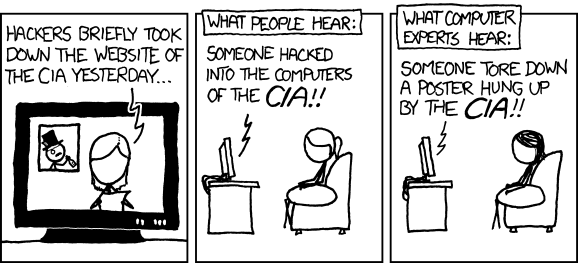



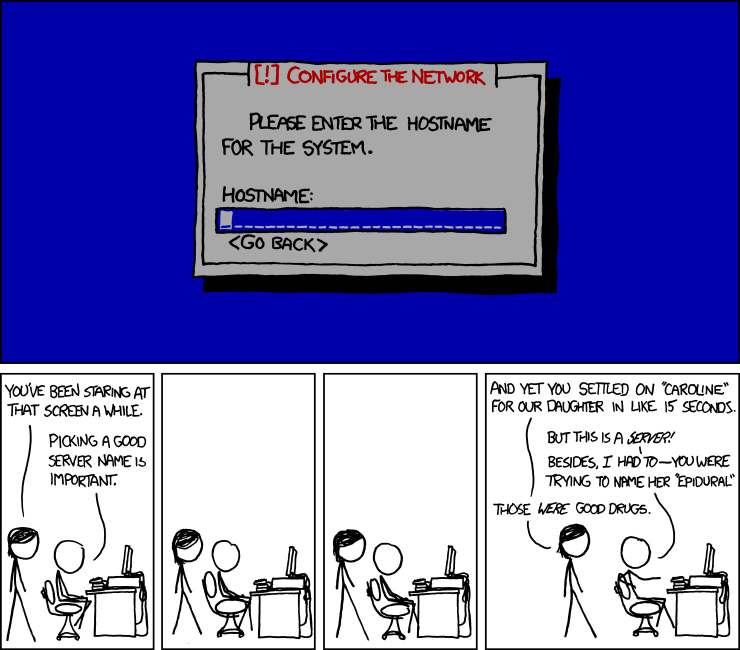


 Posts
All Comments
Posts
All Comments